
J.P. Morgan Plans Nigeria Merchant Bank Before End Of 2026
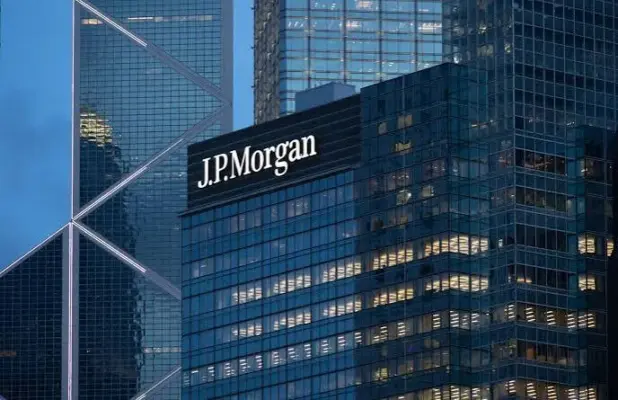
J.P. Morgan is planning to establish a merchant bank in Nigeria, with operations expected to begin before the end of 2026, subject to regulatory approval.
According to The Cable, the Managing Director of J.P. Morgan West Africa, Dapo Olagunji, disclosed this at the Nigeria–Asia Financial Connectivity Dialogue in Singapore on October 8.
According to a statement on the dialogue, the meeting was convened by the Central Bank of Nigeria (CBN) in collaboration with J.P. Morgan, Nigerian Exchange Group (NGX) and FMDQ Group.
The proposed establishment of the merchant bank would expand the United States financial services firm’s presence in Nigeria, with the potential to deepen the country’s financial markets and improve access to international investment.
The announcement came amid engagements by CBN Governor Olayemi Cardoso with financial institutions and market stakeholders in Singapore ahead of the International Monetary Fund and World Bank annual meetings in Bangkok.
J.P. Morgan’s proposed expansion also follows Nigeria’s inclusion in the firm’s new emerging markets index on September 15, with the country assigned a 7.4 per cent weighting.
The index, known as the Government Bond Index–Emerging Markets Edge (GBI-EM Edge), tracks local-currency government bonds across emerging markets and was launched at the end of September.
Nigeria’s inclusion comes nearly 11 years after it was removed from J.P. Morgan’s GBI-EM in 2015.
The country’s 7.4 per cent weighting places it among the larger markets represented in the new benchmark, potentially increasing the visibility of Nigerian government securities among international fixed-income investors.
The planned merchant bank is expected to support corporate financing, create opportunities for businesses and contribute to the development of Nigeria’s financial services sector.
The move comes as the Federal Government seeks to attract foreign investment and expand the economy, with President Bola Tinubu’s administration targeting a $1 trillion economy by 2030.
Tinubu, who assumed office in May 2023, removed the petrol subsidy and liberalised the foreign exchange market as part of his administration’s economic reforms. The measures have, however, coincided with a sharp rise in the cost of goods and services, placing pressure on households and businesses.
In his October 1, 2026, Independence Day broadcast, the President said Nigeria had crossed its “Red Sea” and was heading to the “Promised Land,” arguing that his administration had stabilised the economy and that the period of hardship was ending.
0 comments
Discussion 0
No comments yet. Be the first to share your thoughts!